Working in Las Vegas, we see a lot of soil contamination tied to the area's past as a railroad hub and its explosive growth since the 1990s. Old fueling stations near Fremont Street, dry cleaners along Charleston, and current industrial yards in North Las Vegas all leave behind hydrocarbons, chlorinated solvents, and heavy metals like lead and arsenic. The arid climate here actually helps in one way: low rainfall means less leaching, so contaminants tend to stay in the upper few feet. But that also makes them easier to remobilize during excavation. Before we start any remediation, we always run a detailed site assessment, often combining a study of soil classification to map the stratigraphy with laboratory analysis for VOCs and SVOCs. That baseline tells us exactly how deep and how widespread the contamination is.
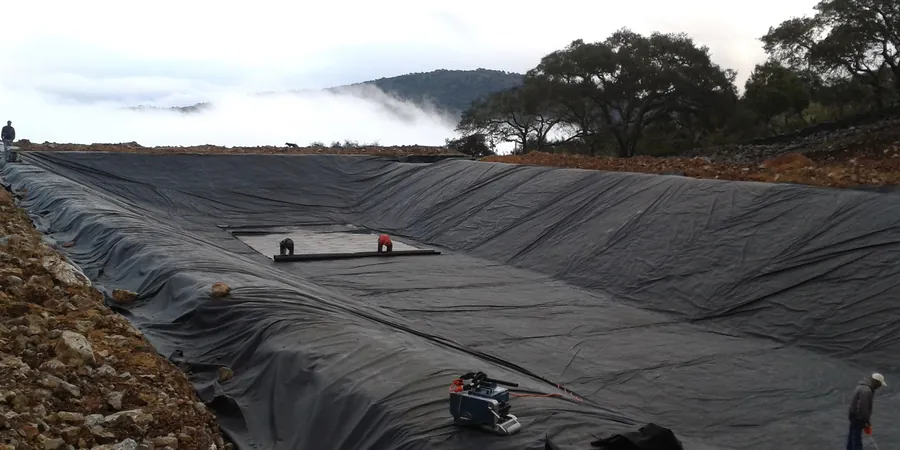
The caliche layer in Las Vegas can block vapor flow and slow down in-situ oxidation — pre-treatment with permeability testing is essential.
Service characteristics in Las Vegas
Critical ground factors in Las Vegas
The biggest risk we face in Las Vegas is the caliche layer acting as a cap that traps vapors and prevents proper oxidation or vapor extraction. We've seen projects where injection wells were placed without first verifying the permeability profile, and the reagent simply pooled above the caliche, treating nothing. Another common issue is the presence of buried utilities from decades of urban development — old pipelines, abandoned fuel tanks, and fiber-optic conduits that are not on any map. We always run ground-penetrating radar before any drilling or excavation. A third risk is the extreme summer heat: surface temperatures above 120°F can degrade certain reagents and make field work unsafe if not planned for early morning or evening shifts.
Our services
We offer turnkey contaminated soil remediation in Las Vegas, from initial site assessment through NDEP closure.
In-Situ Chemical Oxidation (ISCO)
We inject sodium persulfate or hydrogen peroxide directly into the contaminated zone through temporary or permanent wells. The reaction breaks down hydrocarbons and chlorinated solvents into CO2 and water. We design the injection grid based on permeability testing and treat up to 500 cubic yards per event.
Soil Vapor Extraction (SVE) with Bioventing
For volatile contaminants like gasoline and solvents in the vadose zone, we install vertical extraction wells connected to a vacuum blower. The vapor stream is treated through activated carbon. We combine it with bioventing to stimulate native microbes that degrade residual contamination. Typical flow rates are 50–200 cfm per well.
Frequently asked questions
How much does contaminated soil remediation cost in Las Vegas?
For a typical residential or commercial site in Clark County, the cost ranges between US$3,370 and US$11,980 depending on the volume of soil, contaminant type, depth, and whether the treatment is in-situ or ex-situ. A Phase I assessment is usually around US$1,500 to US$3,000 before any remediation begins.
What are the most common contaminants found in Las Vegas soil?
We most often find petroleum hydrocarbons from old gas stations (BTEX, TPH), dry-cleaning solvents like PCE and TCE, and heavy metals including lead, arsenic, and chromium from former industrial sites. The arid climate concentrates these contaminants near the surface, so they rarely reach the deep groundwater table.
How long does a typical remediation project take in Las Vegas?
A standard SVE or ISCO project takes 2 to 4 months for source-area treatment, followed by 2 to 4 months of monitoring to confirm closure criteria. Full site closure with NDEP can take 6 to 12 months if groundwater is involved. We always phase the work to minimize downtime between treatment and verification sampling.