In Las Vegas, much of the urban development sits on Quaternary alluvial fans and playa deposits that can shift dramatically with moisture. A soil mechanics study here is not just a regulatory step under IBC — it is the only reliable way to understand how the ground will behave under load. The valley's arid climate means that many soils appear competent when dry but can collapse or undergo significant settlement once irrigated or after a heavy rain event. In our experience, the most common oversight is assuming that surface conditions reflect what lies at foundation depth. A proper investigation typically combines test pits with SPT borings to capture both the stratigraphy and the in-situ strength parameters, which is why we always recommend starting with a calicatas exploratorias campaign before committing to deeper drilling.
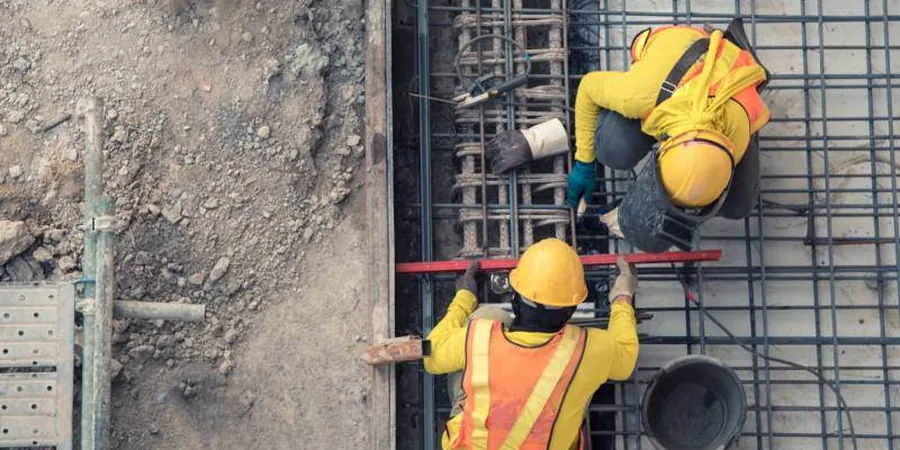
A soil mechanics study in Las Vegas must address collapsible alluvial soils that lose strength upon wetting — a risk often overlooked in arid-zone projects.
Service characteristics in Las Vegas
Demonstration video
Critical ground factors in Las Vegas
Comparing the northwest foothills near Red Rock Canyon with the central valley around the Strip reveals a stark contrast in soil behavior. In the northwest, gravelly colluvium over bedrock provides relatively stable bearing conditions, while the central basin contains thick sequences of silty sands with high collapse potential. A soil mechanics study must differentiate between these settings because the same foundation design that works in Summerlin could lead to differential settlement of several inches in the downtown area. The presence of shallow groundwater in some pockets near the Las Vegas Wash further complicates matters, requiring careful evaluation of liquefaction susceptibility even in this seismic region.
Our services
We deliver soil mechanics studies tailored to Las Vegas conditions, covering everything from preliminary site reconnaissance to final bearing capacity recommendations.
Field Exploration & Sampling
Boreholes with SPT, thin-walled tube sampling, and test pits excavated to depths of 20–50 feet depending on project loads. All sampling follows ASTM D1586 and D4220 protocols to preserve in-situ moisture and density.
Laboratory Testing & Analysis
Classification (USCS/AASHTO), collapse potential (ASTM D5333), direct shear, and consolidation tests. Results are integrated with seismic site classification per ASCE 7 to produce foundation recommendations for both shallow and deep systems.
Frequently asked questions
How much does a soil mechanics study cost in Las Vegas?
For a typical single-family lot or small commercial pad, the cost ranges between US$3,160 and US$4,950. Larger subdivisions or multi-story structures with deeper boring requirements will fall at the higher end. The final price depends on the number of borings, laboratory tests requested, and site accessibility.
What is the difference between N-SPT and bearing capacity in Las Vegas soils?
N-SPT is a blow count measured during drilling that reflects relative density in sands or consistency in clays. Bearing capacity is the calculated stress the soil can support without excessive settlement. In Las Vegas, a soil with N=15 in a dry alluvial fan may have an allowable bearing capacity of 4,000 psf, but if the same soil is collapsible, that value drops significantly once wetted. The soil mechanics study provides both the N-values and the collapse-adjusted bearing capacity.
Which Las Vegas zones have the highest soil collapse potential?
The central basin between downtown and the Strip, especially areas underlain by the Las Vegas Formation, consistently shows collapse potentials above 2%. The northwest foothills and the eastern valley near Lake Mead typically have lower collapse risk due to higher gravel content and better drainage. A site-specific soil mechanics study is the only reliable way to determine whether a given parcel falls in a high-collapse zone.