We worked on a landfill expansion near the Las Vegas Wash where the liner system failed within two years because the geomembrane specification didn't account for the extreme UV exposure and thermal cycling of the Mojave Desert. The 1.5-mm HDPE sheet had been specified to GRI-GM13 standards but the seam testing protocol omitted the peel adhesion test at elevated temperatures. That oversight cost the client $400,000 in remediation. Before finalizing any geomembrane specification for Las Vegas, a thorough infiltración study should be done on the subgrade to confirm the base drainage layer meets the design permeability of 1x10⁻⁵ m/s. The desert soil here, primarily alluvial silty sands with low plasticity, can shift moisture content rapidly during monsoon events, which directly affects the interface friction angle between the geomembrane and the clay liner.
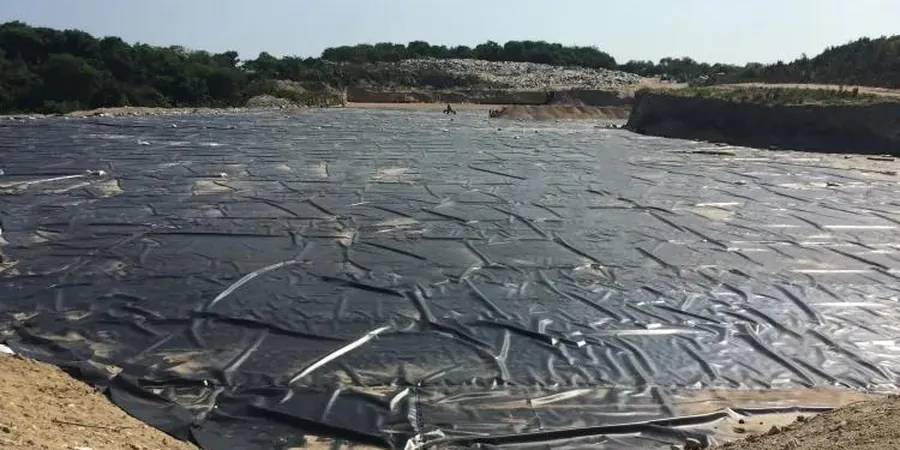
In Las Vegas, the UV index exceeds 11 in summer — standard geomembrane formulations degrade in less than 3 years without a carbon black content of at least 2.5%.
Service characteristics in Las Vegas
Demonstration video
Critical ground factors in Las Vegas
The biggest risk we see in Las Vegas is subgrade desiccation cracking beneath the geomembrane. The alluvial soils here have a plasticity index between 4 and 12, and when the monsoon rains hit after a dry spell, the clay layer shrinks and forms cracks that create preferential leakage paths. We also find that the high groundwater table near the Las Vegas Wash fluctuates by up to 5 feet seasonally, which can generate uplift pressures under the liner system if the gas collection layer isn't properly vented. Specifying a textured geomembrane with a higher interface shear strength is important for slopes, but the texture reduces the tensile capacity by about 10%, so the design must account for that trade-off.
Our services
We provide two core services to support geomembrane specification and installation in Las Vegas:
Geomembrane Material Testing and Certification
We test the full roll of HDPE or LLDPE geomembrane at our ISO 17025 lab. We verify thickness, tensile properties, tear and puncture resistance, carbon black content, and OIT. We also perform burst testing per ASTM D751 and seam shear testing per ASTM D6392.
Subgrade and Interface Characterization
Before the geomembrane is placed, we test the subgrade soil for density, moisture content, and compaction (ASTM D698). We run direct shear tests on the geomembrane-soil interface to determine the friction angle and adhesion values needed for slope stability design on Las Vegas sites.
Frequently asked questions
What thickness of geomembrane is recommended for landfill applications in Las Vegas?
Clark County regulations and GRI-GM13 both require a minimum of 1.5 mm (60 mil) for primary liners in landfill cells. For secondary containment under tanks or ponds, 1.0 mm (40 mil) is sometimes accepted, but we always recommend 1.5 mm because of the high puncture risk from the angular gravel drainage layer common in local projects.
How does the Las Vegas climate affect geomembrane performance?
The extreme UV index (often above 11) degrades standard polyethylene formulations quickly. We require a minimum carbon black content of 2.5% by weight per ASTM D4218 to block UV penetration. The daily thermal cycle of 40°F to 110°F also causes expansion-contraction stress on seams, so we specify a higher seam overlap of 4 inches and run thermal cycling tests on test strips.
What is the typical cost for a geomembrane specification and testing program in Las Vegas?
For a standard 5-acre landfill cell with material testing, interface shear tests, and seam certification, the cost ranges between US$660 and US$1.530. This includes lab testing of three roll samples, subgrade compaction verification, and a final certification report. Costs increase if field seam testing or destructive sampling is required.
Do I need a subgrade compaction test before installing the geomembrane?
Yes — absolutely. The subgrade must be compacted to at least 95% of the maximum dry density per ASTM D698 (Standard Proctor). If the subgrade is too loose, differential settlement can tear the geomembrane. We also run a plate load test to confirm the subgrade modulus is above 10 MPa, which is the minimum for a stable base in Las Vegas alluvial soils.