Soils in Las Vegas vary drastically between the alluvial fans on the western edge near Red Rock Canyon and the playa clays of the Las Vegas Wash. The coarse sandy gravels on the west provide high friction angles but risk collapse under saturation, while the expansive clays in the southeast exhibit low drained shear strength and high plasticity. For a retaining wall design in Summerlin, we typically measure effective friction angles of 34 to 38 degrees, but in the Green Valley area those values drop to 22 degrees or less. Our direct shear testing captures these differences before any foundation work begins, and we often combine it with an ensayo Proctor to establish compaction targets and a clasificación de suelos for full characterization.
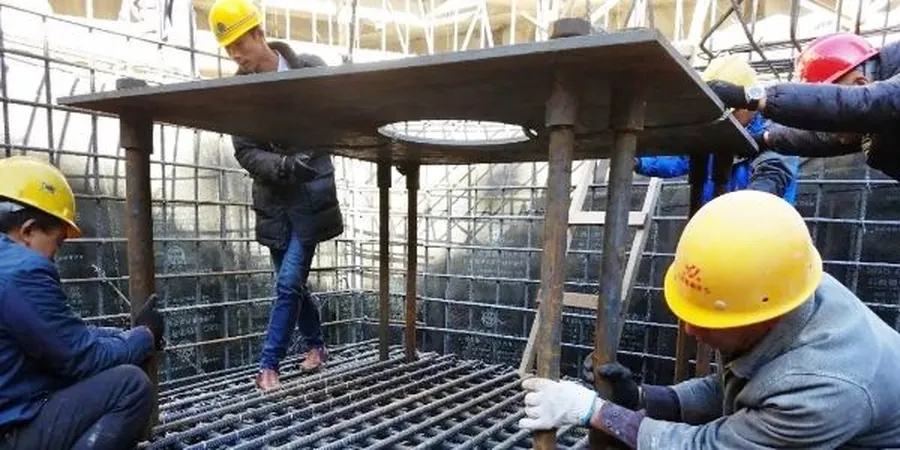
In Las Vegas, dry strength is deceptive; the direct shear test under saturated conditions reveals the real collapse potential of alluvial soils.
Service characteristics in Las Vegas
Critical ground factors in Las Vegas
IBC 2018 and ASCE 7-16 require that all foundations in Seismic Design Category D (which covers most of Clark County) be designed using strength parameters from laboratory testing. Relying on empirical correlations alone for Las Vegas soils is risky: the alluvial fans contain cobbles that skew blow counts, and the playa clays exhibit strain-softening behavior that triaxial tests may miss. A direct shear test run on undisturbed samples from the active zone—typically the top 10 to 15 feet—provides the actual drained strength parameters needed for bearing capacity and sliding checks. The Nevada Seismological Laboratory has recorded over 1,000 micro-earthquakes in the region since 2000, reinforcing the need for accurate shear strength data.
Our services
We offer three levels of direct shear testing tailored to Las Vegas projects:
Consolidated-Drained Direct Shear
Standard CD test on remolded or undisturbed samples. Three normal stress stages with controlled shear displacement up to 15 mm. Suitable for sands, silts, and low-plasticity clays typical of the alluvial fans in Summerlin and Henderson.
Unconsolidated-Undrained Direct Shear (UU)
Quick test for total stress parameters. Used for short-term stability analysis of excavations and temporary slopes. Ideal for the high-plasticity clays found near the Las Vegas Wash where undrained conditions govern during construction.
Residual Shear Strength Testing
Multiple reversal cycles to measure the fully softened and residual friction angle for clayey soils. Critical for analyzing reactivated landslides along the calico hills and evaluating slope stability after heavy precipitation events.
Frequently asked questions
What is the difference between direct shear and triaxial tests?
The direct shear test forces a failure plane along a fixed horizontal surface, which is appropriate for soils with existing bedding planes or slickensides. Triaxial tests allow the sample to fail along the weakest plane. For Las Vegas alluvial soils with random gravel layers, direct shear often gives more conservative friction angles.
How much does a direct shear test cost in Las Vegas?
A standard consolidated-drained direct shear test with three normal stress stages ranges between US$610 and US$890. The final cost depends on sample preparation complexity, number of specimens, and whether the samples are undisturbed or remolded. We provide a detailed quote after reviewing the project scope.
Do you accept samples from contractor drills or only from your own field crew?
We can test samples collected by your crew provided they are sealed, labeled, and transported within 48 hours. For critical projects, we recommend having our technicians collect thin-walled tube samples or block samples to minimize disturbance before the direct shear test.