We deploy a trailer-mounted pump system and double-packer assembly for field permeability tests in Las Vegas. The rig reaches depths up to 60 feet in the alluvial fans and cemented gravels typical of the valley. For each test interval we isolate a 3- to 5-foot section using inflatable packers and measure flow under constant or falling head. This method follows ASTM D5092 and directly yields hydraulic conductivity (k) values for foundation design and groundwater control. The entire setup is mobile and fits within a standard pickup truck bed, so we can access tight residential lots on the Strip periphery or remote sites near Red Rock Canyon. Before starting any test we perform a preliminary site assessment with soil classification to select the appropriate head condition.
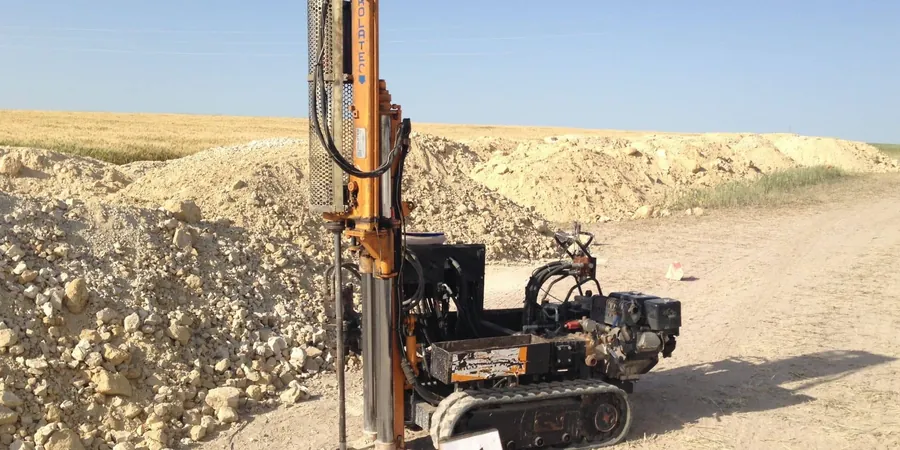
Direct field measurement of permeability avoids the scale errors from lab tests on small core samples in heterogeneous alluvial soils.
Service characteristics in Las Vegas
- Pre-test flushing to remove cuttings and fines from the interval
- Three-stage pressure cycle at 0.5, 1.0, and 1.5 kg/cm² for Lugeon tests in rock
- Falling-head measurement using a calibrated standpipe for low-permeability silts
- Real-time data logging with pressure transducers and flowmeters
Critical ground factors in Las Vegas
A hotel foundation near the Las Vegas Strip encountered 8 feet of perched water during excavation. The initial lab permeability tests on grab samples indicated k = 1E-6 cm/s, but the field Lefranc test in the same layer returned k = 2E-3 cm/s. The difference came from a 2-inch gravel seam missed in the sampling. If the team had relied solely on lab data, the dewatering system would have been undersized by a factor of 2000. We see this scenario repeat in the cemented alluvium of northwest Las Vegas where caliche layers hide high-permeability lenses. Field testing prevents costly surprises.
Our services
We offer three related services tailored to Las Vegas geology:
Lugeon Packer Testing in Bedrock
For the Tertiary limestone and conglomerate units below 150 feet. Five-stage pressure cycles determine fracture permeability and grout take estimates.
Lefranc Constant Head in Alluvium
Applied in the upper 60 feet of silty sand and gravel. Falling-head variant used when k drops below 1E-4 cm/s. Includes borehole development.
Multi-Level Permeability Profiling
Sequential tests at 5-foot intervals down the entire borehole. Produces a continuous k-profile. Ideal for dewatering design in layered alluvium.
Frequently asked questions
How much does a field permeability test cost in Las Vegas?
The typical cost ranges from US$640 to US$1,000 per test interval. This includes mobilization, packer setup, three pressure stages, and a written report with k-values. Volume discounts apply for 6 or more intervals on the same site.
When should I choose Lugeon over Lefranc for Las Vegas soils?
Use Lugeon when testing rock or cemented alluvium where fractures control flow. Use Lefranc constant head in granular soils (sands and gravels) where the soil matrix dominates. If you are in the caliche-rich layers west of downtown, Lugeon gives better data on secondary permeability.
How deep can your equipment reach in the Las Vegas basin?
Our downhole packer system works to 200 feet using NQ drill rods. For deeper intervals we mobilize a wireline packer that reaches 400 feet. Most residential and commercial projects in Las Vegas require tests between 30 and 120 feet.
What is the difference between a field permeability test and a lab test?
Lab tests measure a small 3-inch core sample under ideal conditions. Field tests measure a 3- to 5-foot section of the actual ground under in-situ stress and saturation. In Las Vegas alluvium, field k-values are typically 10 to 100 times higher than lab values due to gravel seams and macropores.