Las Vegas grew fast from a railroad stop to a metropolitan hub. That rapid expansion meant building on challenging desert terrain. The alluvial fans and playa deposits beneath the Strip create variable conditions. Retaining wall design here demands local knowledge. A wall that works in Chicago may fail in Las Vegas. The soil profile shifts from loose sands to stiff clays within blocks. Understanding these transitions is critical. Before finalizing wall geometry, we often run a [geophysical survey with MASW](/masw-vs30/) to map soil stiffness layers. That data feeds directly into the wall design parameters. Combined with borehole SPT tests, we get reliable stratigraphy for each project.
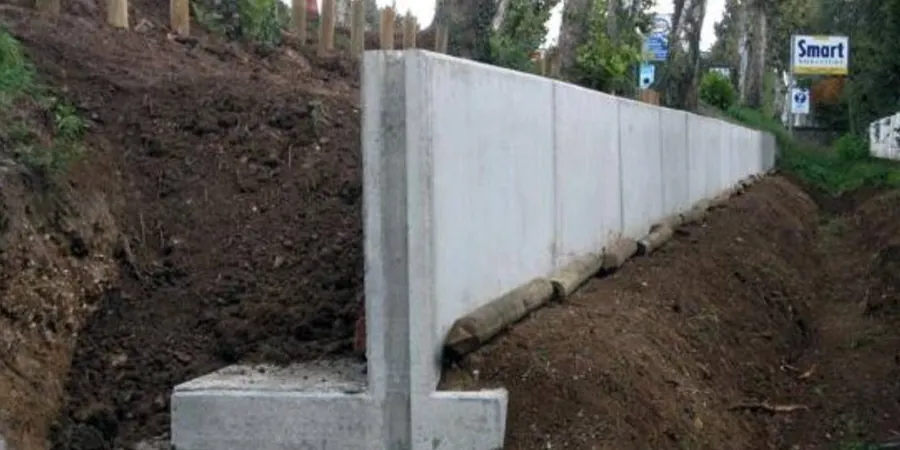
Retaining wall design in Las Vegas requires site-specific soil parameters — not generic textbook values — to prevent differential movement and structural failure.
Service characteristics in Las Vegas
- Active and passive earth pressure coefficients tailored to Vegas soils
- Drainage design to prevent hydrostatic pressure buildup
- Seismic lateral earth pressure per ASCE 7-16
Critical ground factors in Las Vegas
Las Vegas sits at an elevation around 2,000 feet and experiences low annual rainfall. Yet flash floods are real. The valley floor contains deep layers of collapsible soils. When saturated, these soils lose structure rapidly. For retaining wall design, that means the passive resistance in front of the wall can vanish. We have seen walls shift several inches after a single monsoon event. The risk is not only structural but legal. A failed wall can damage adjacent property. Our design includes drainage blankets, weep holes, and compacted backfill to mitigate this. We also check for liquefaction in the rare but possible seismic event.
Our services
We offer a full suite of retaining wall design services tailored to Las Vegas conditions. Each project receives individualized attention from our geotechnical team.
Gravity and Cantilever Walls
Design of reinforced concrete or masonry gravity walls. We calculate overturning, sliding, and bearing stability using site-specific soil parameters.
Segmental Retaining Walls (SRW)
Engineered solutions for modular block walls. We verify internal stability, global stability, and drainage requirements per NCMA guidelines.
Mechanically Stabilized Earth (MSE) Walls
Design of MSE walls with metallic or geosynthetic reinforcement. We determine pullout capacity and connection strength for Las Vegas fills.
Tieback and Anchored Walls
Anchored retaining walls for deep excavations. We design grouted tiebacks, verify bond zone capacity, and specify corrosion protection.
Frequently asked questions
What soil tests are needed before designing a retaining wall in Las Vegas?
We typically require SPT borings, Atterberg limits, direct shear or triaxial tests, and collapse potential tests. For walls over 6 feet, we also recommend a seismic site response analysis.
How much does retaining wall design cost in Las Vegas?
Typical engineering fees range from US$1,200 to US$3,580 depending on wall height, length, soil conditions, and required testing. This includes site visit, analysis, and stamped calculations.
Do I need a permit for a retaining wall in Clark County?
Yes. Clark County requires a building permit for walls over 4 feet in height. Our design package includes all necessary calculations and details to support your permit application.
What is the most common failure mode for retaining walls in Las Vegas?
The most common issue is inadequate drainage leading to hydrostatic pressure buildup. In collapsible soils, we also see loss of passive resistance at the toe. Both can cause wall tilting or sliding.
Can you design a retaining wall for seismic loads in Las Vegas?
Absolutely. Las Vegas is in Seismic Design Category C or D depending on site class. We calculate seismic lateral earth pressure using the Mononobe-Okabe method per ASCE 7-16.